Alissa was diagnosed with MS twice. Once unofficially in 2014 and, after testing diagnosed again — this time officially — in 2015. The path to diagnosis is often a long and arduous one for most people diagnosed with MS but for Alissa it was particularly distressing.
“I should have been diagnosed three years earlier than I was. My original doctor wouldn’t see me during a really bad relapse, so my mum took me to a new doctor. I had such bad double vision I walked into a wall. That GP said straight away she thought it was MS but the neuro she referred me to wasn’t sure, so there was a bit of back and forth for 4 months before I got my official diagnosis.” Alissa says.
Back in 2011, Alissa had a blind spot appear in her left eye. She went to emergency, but opthalmologists were unsure of the possible cause, diagnosing a possible migraine instead. Over the years, Alissa’s symptoms got progressively worse but would come and go over time.
“I would feel like my hand or lip was ten times the size. I was numb in my hands and the soles of my feet, I couldn’t feel the freezing bathroom tiles in winter. I was getting migraines that would last a week. I was having trouble walking and had strange skin sensations.
“I went into my doctor with a whole list of common MS symptoms, I had every single one, but my GP actually laughed at me and diagnosed me as illness phobic. By that point I couldn’t walk, I couldn’t get up stairs at all, I had slurred speech, no memory, and was dropping things because of numbness.
After that, Alissa had to seek out a new medical practice — as any doctors she saw in her current practice would see the original hypochondria diagnosis and not explore her symptoms any further.
“The weirdest thing is I was relieved [about my eventual diagnosis]. Someone was actually listening and something is actually wrong — I’m not crazy,” Alissa says.
“I feel like if I’d been listened to earlier, my symptoms wouldn’t have gotten so bad and I feel like that delay still impacts me today.”
Getting back on her feet
After giving up her 16-year career as a dental nurse following her diagnosis, Alissa was feeling extremely isolated.
“By the second time I was diagnosed I couldn’t walk. I didn’t have the NDIS yet, aids or a wheelchair. I pretty much spent the next year on the lounge. I couldn’t get out, I was extremely isolated. I didn’t tell anyone about my diagnosis either as I was still processing it myself. I literally disappeared.
“A big moment for me was when one of my friends said ‘I’m coming over I’m taking you out. I’ve booked a wheelchair’. She took me out for the first time in a year and I was so emotional just to be out of the house, it was very overwhelming.”
“I felt really alone, but after that outing I reached out to MS Plus. I spoke to an MS nurse, just to know there was someone there who I could talk to who understood what I was going through.”
Alissa was one of the first cohort of people to access the NDIS. They sent her a support worker who was training to be an exercise physiologist (EP).
“She started helping me doing some basic stuff. I did exercises with her in the pool as I had no balance and she started building up some strength with me this way, eventually being able to do basic exercises out of the water. I built up to the point where I could take a few more steps. I ended up with EP Caitlin at the Lidcombe Wellbeing Centre and between her and my original support worker, they got me walking again.
“Before I started physio and EP, I couldn’t even walk the 30 metres from the car to the school to grab the kids. That was a really hard time, but over many years, I gradually increased the distance I was walking to one kilometre, then two and so on until I could start to run again.”
Finding a new passion
After exercise physiology and hydrotherapy helped Alissa to walk again, she knew she wanted to find a new sense of purpose. Alissa began a volunteer role with her kids’ local Little Athletics club and it ignited her passion and talent for coaching. Eventually she created her own squad of Race Walkers that she coaches twice weekly, year round.
Alissa says, “Nothing in life gives me greater joy than guiding and witnessing the skill, strength, mental maturity and self-belief grow in my athletes. When they achieve their goals, I’m right there crying and celebrating with them!”
Two athletes in her squad recently competed in the Australian National Track and Field Championships in Perth, so Alissa successfully applied for an MS Go for Gold Scholarship, which helped her to travel to Perth to cheer her athletes on.
“I’m so proud of these kids, they are such amazing young athletes. Knowing I’ve been with them from the very beginning and an integral part of their journey to get to Nationals — watching them achieve their goals competing at the highest level brought my dream, and our athlete/coach partnership, full circle. Witnessing the very first National Gold medal winning race for one of my squad members was incredibly emotional and quite surreal! The fact he is now ranked 25th in the world on the world’s fastest ‘Under 18s Top List’ for World Athletics at only 11years of age is even crazier! The irony never ceases to amaze me – the disabled coach who had to learn to walk again, teaching athletes how to walk really really fast!”
“My MS helped me to find a new path in coaching, which I love. I’m helping kids reach their goals and dreams. It’s more fulfilling than I ever imagined. I'm so thankful for the MS GFG grant that enabled my dream to watch and cheer on my athletes at Nationals come true.”
Alissa says one good thing about her diagnosis was that it forced her to slow down and put herself first.
“I got to see my kids grow up, spend afternoons with them. I was a lot more present as I wasn’t working. It’s such a precious time so that was kind of a gift from my MS.”
“Now I know how important it is to advocate for myself in the medical system, and how to look after myself. To say no to things and to rest, which I never did before. You would do what everyone else wanted, to make everyone else happy but I ‘m a bit more protective of myself and my time and energy,” Alissa says.
Related articles
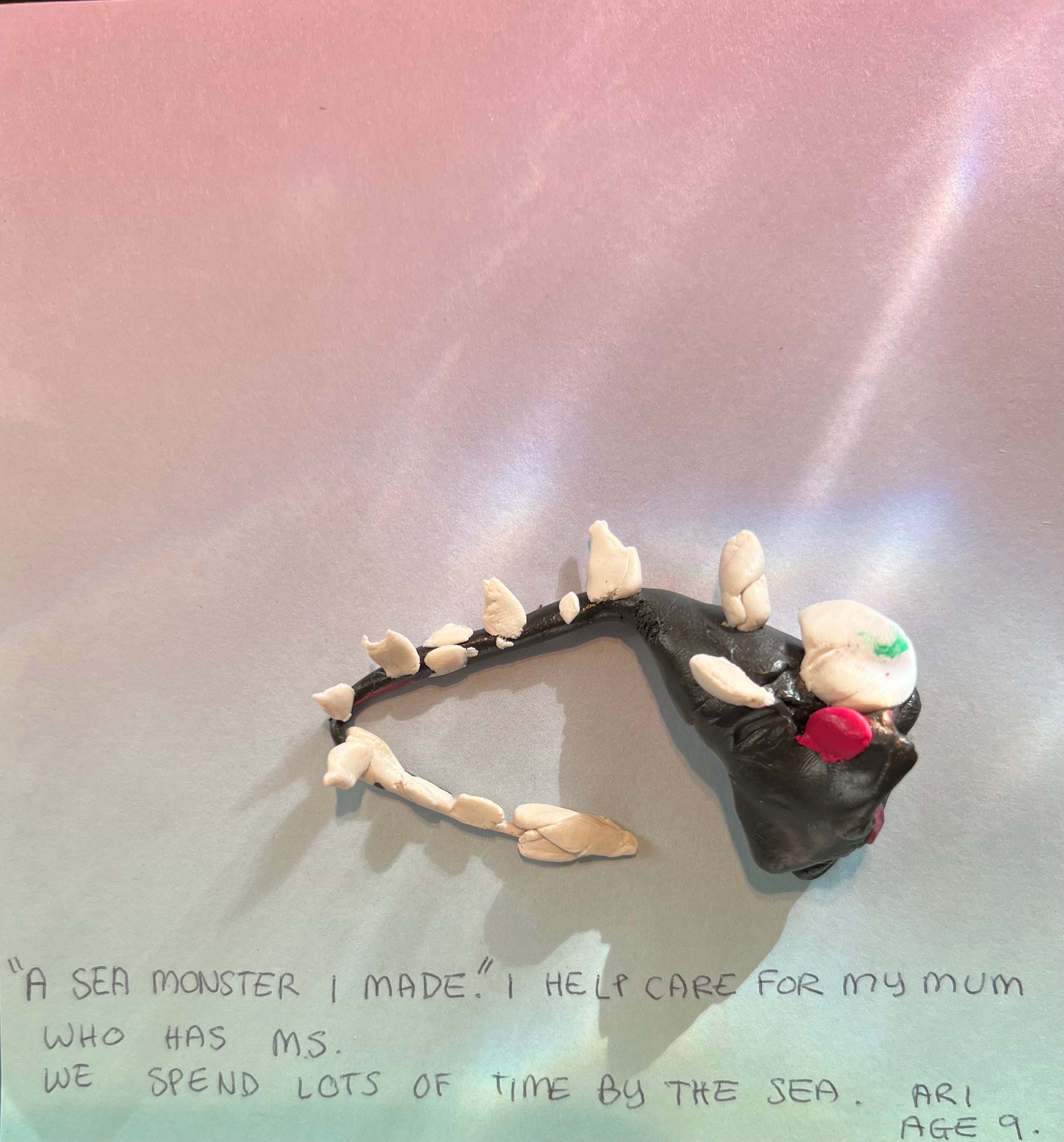
Art as connection: How Ari and Jade share creativity and care
For as long as nine-year-old Ari can remember, art has been an important part of his life. So last year, Ari’s mum Jade encouraged him to enter MS Plus’ Virtual Art Show, which celebrates a range of visual art, including paintings, illustrations, sculptures, craft, digital artwork and photography.
- News
- 25 July 2026
From hospital to home: Christine’s story
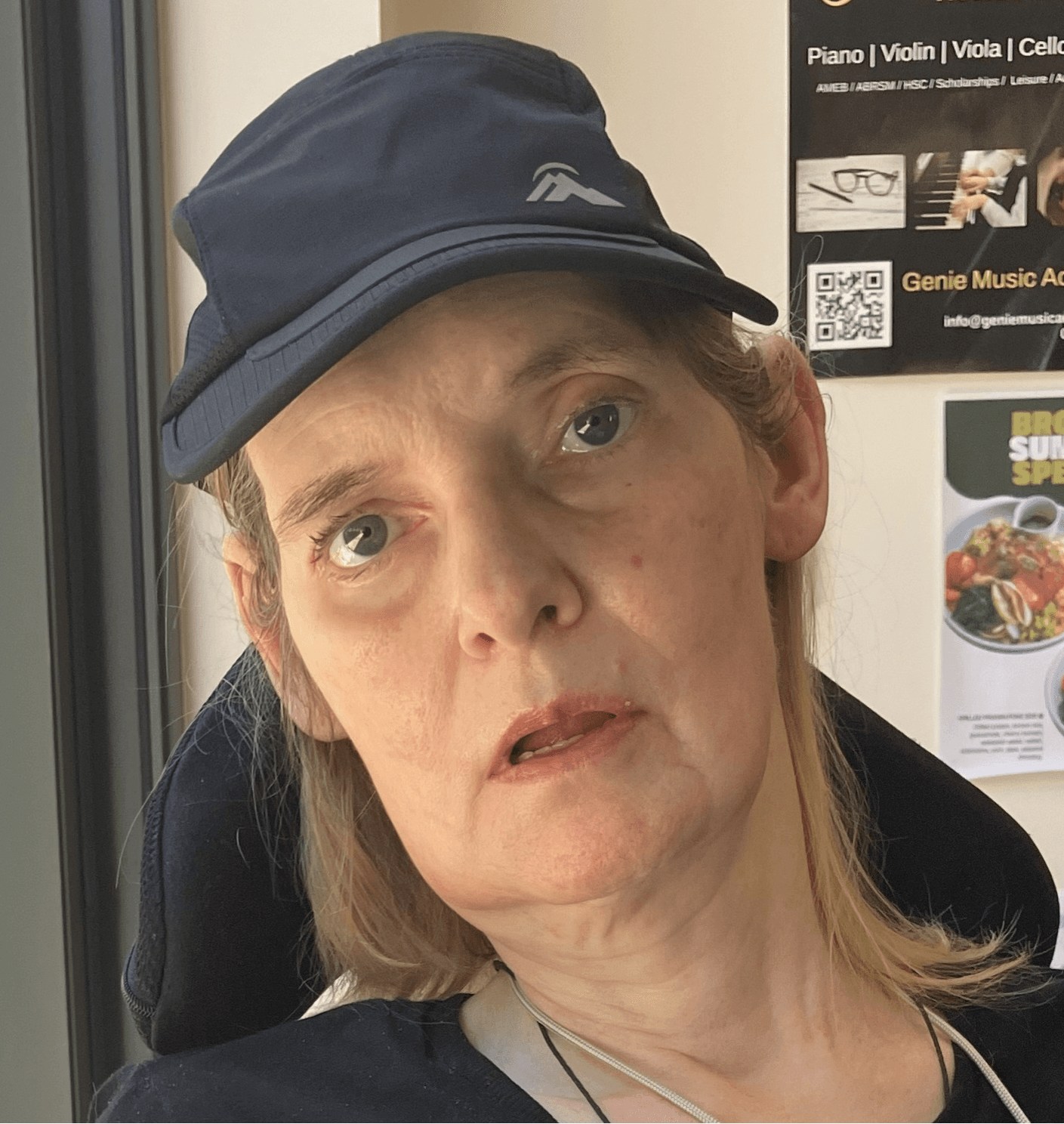
When Christine moved into MS Plus’ supported accommodation at Lidcombe Home after an extended hospital stay late last year, it had a profound impact on her health and wellbeing.
- News
- 13 July 2026
You’re not alone: How Mark found his way back from the edge
Mark was at his lowest ebb more than a decade ago. Struggling with a recent MS diagnosis and caring for his mother, who had cancer, Mark says everything was getting too much until three simple words changed everything.
- News
- 29 June 2026