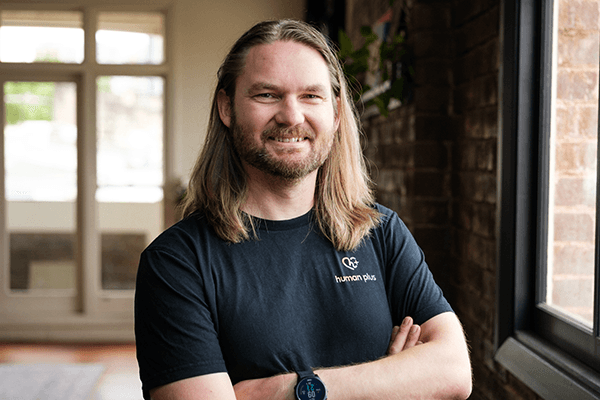
When Matt was diagnosed with MS several years ago, life felt like a whirlwind.
“Like many people I had quite a journey to diagnosis, having first experienced MS symptoms probably 15 years before then. Optic neuritis was my presenting condition meaning I stopped being able to see out of my left eye, I went to hospital and MS was the diagnosis,” he says.
“It was a shock, confusing and a very scary time. I remember I’d been diagnosed that day, the doctors came around and explained it and they did a very bad job of it, to be honest.”
A referral to MS Plus’ dedicated support service MS Connect made a world of difference.
“As soon as I got out of hospital I rang up, and only an hour later I got a call from an MS Plus nurse. My wife and I spoke to her a few times over the first couple of weeks and she was fantastic – good at putting things in real terms. The doctors give you all these clinical terms, but she talked through what things meant, what I’ll see my neurologist about and different medications. In a sea of confusion, it was fantastic to be able to have that,” he recalls.
Matt also connected with a peer support volunteer with MS (“it was so good to talk through the realities of MS and not sugarcoat things”) and joined a face-to-face meet up group north of Sydney.
“I really experienced the value of volunteers and I understand that these things don’t happen unless people put their hand up. There’s a lot of return of investment in terms of the time volunteers put in and the impact it can have.”
So when Matt received an email asking if he was interested in volunteering with MS Plus, he was quick to say yes.
“Once I’d been onboarded to the peer support program, Katarina (MS Plus’ Peer Support Program Lead) reached out and said she was looking to set up an online men’s group, and asked if I’d be interested in facilitating it.
“Face-to-face groups are great but obviously can’t service everyone depending on where people live and whether they can physically make it along. Being able to have an online and after-hours option means we can cast a wider net.”
The group, mainly attended by men aged 35 to 55, now meets regularly and Matt says it has become a safe space for participants to share their experiences and get advice from others.
“The group being men’s only means there’s a different lens on it and there are things people might be more comfortable talking about which they may not be in a mixed environment. Sometimes when people come along, they’re going through something and want to get it off their chest. Other people just like having a chat and a laugh, so different people get different things out of it.”
Matt says that his volunteer work has helped to give him purpose in his MS journey.
“There’s not much you can do for your own MS, just follow what the doctors say, so you can feel quite powerless. This is something I can do to make an impact somewhere, even if it’s not on my own health.
“It’s really satisfying to me to provide a space where men and come and have a chat. Some people dip in and out when circumstances dictate that for them, but it’s great to have a commitment to be there and make sure people know someone will be there if they ever need to have a good chat.”
Help ensure no one faces MS alone
When Matt was diagnosed with MS, an MS nurse helped turn confusion into clarity and gave him the confidence to move forward. Your support can help ensure more people living with MS have access to the information, guidance and reassurance they need.
opens in new tab Support the Christmas AppealRelated articles
Support to keep working: Santo’s story
Discover how MS Plus Employment Support Service has helped Santo stay employed for 30 years after his MS diagnosis through personalised workplace support.

- 19 October 2026
Your spring and summer wellbeing guide
Make the most of spring and summer with practical tips for managing heat sensitivity, staying active, conserving energy and supporting your wellbeing while living with MS or another neurological condition.

- 15 October 2026
Ask Nurse Amy: Staying cool and confident this summer
Learn why heat can worsen MS symptoms and discover practical strategies to stay cool, manage fatigue, stay active and enjoy summer with confidence.
- 14 October 2026