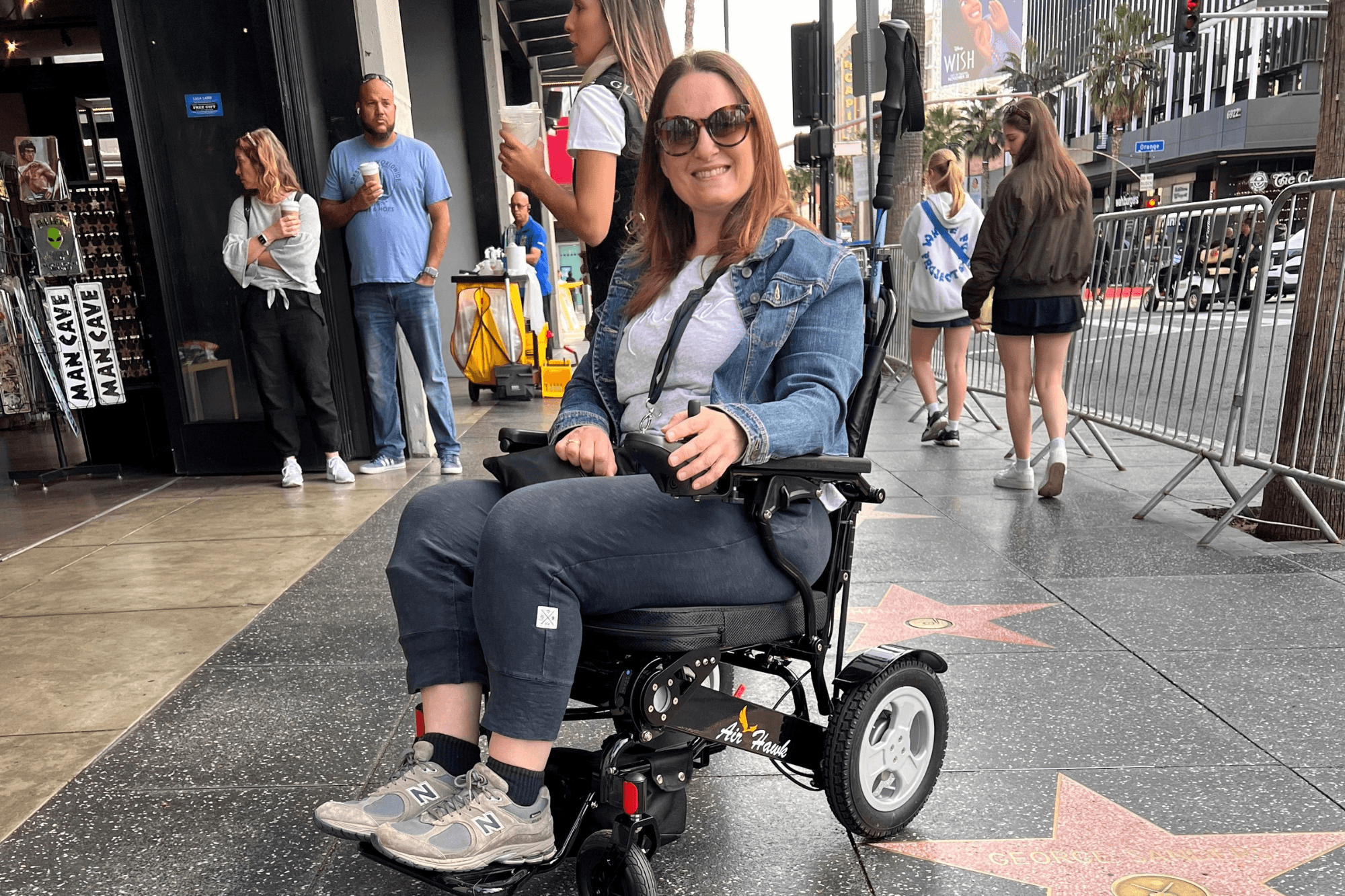
Meta was 23, working full time and in a new relationship at the time she was diagnosed.
‘I was actually quite lucky to be diagnosed the way I was. My mum has MS, and I was going with her to her neurologist appointments but I was experiencing a shooting pain down into my right toe.
‘I mentioned this, as well as my vision issues, to mum’s neuro and he asked me to jump up on the table to do what I now know are some of the standard neuro tests for MS, he then sent me for an MRI which was how I was formally diagnosed,’ Meta says.
Meta made a few lifestyle improvements, including a healthier diet, and managed to continue on with no real symptoms for about a year after her diagnosis.
‘The symptoms I had went away and I stayed pretty well for a while but then I had a bit of a relapse and that’s when I realised “okay I definitely do have MS” and decided to go on medication.’
Now, 20 years after her diagnosis, most of Meta’s symptoms impact her mobility, including foot drop, so she is unable to lift or move her foot by herself.
‘My latest relapse, I got out of the shower, my right foot suddenly started tingling, burning and going numb. It was like I had a line down the middle of me. I was hospitalised and recovered after a month to two but progressively it’s come back and hasn’t worked the same way – first my foot, then my leg, my trunk, arm and hand.
‘I need an ankle-foot orthotic to walk or I would be housebound. Once my symptoms became visible, I had to accept my MS more and tell people about it, which is a huge thing as well. Nevertheless, once you break that wall and get over that you wonder why you didn’t do it sooner.
‘I experience fatigue as well, which I feel like I’m managing better. I understand my body more. By the end of the day I can’t really take as much in, my husband and kids will start talking and I’m like, “um I can’t do this – too hard to think”.’
An overseas holiday done a little differently
Meta and her family had been thinking about taking a trip to the US for some time, especially as Meta’s girls were getting older. Meta had been reluctant at first, worrying about the logistics of a big trip with MS. When her husband suggested she use a wheelchair to help her get around, Meta was reluctant.
‘We wanted to go away together as a family, and I wanted to experience it with them.
‘My husband put it out there, that for us all to enjoy the trip we should take a wheelchair. I was apprehensive, as I had only used one a couple of times before and had never used a wheelchair travelling.
‘I reluctantly called my OT and asked her advice. She was onto it immediately. She advised me that an electric self-guided chair was the way to go and put me in touch with a supplier.
‘Travelling is a totally different experience to what it was before but it’s so much better than not having it or not being able to go at all or missing out on some of the experiences. It’s been truly life changing for me. I hope this my experience gives someone who like me was very apprehensive, the courage to give it a try.
Changing your mindset to live well with MS
‘Even just using a stick or a disabled sticker, everything is a process that you’ve got to accept but I found that just jumping in and doing it was like ripping a band aid off and helped me to function better and live a better life. Not caring what others think.
‘The benefit of travelling with the wheelchair was that I was able to sit and enjoy where I am and what I’m looking at — not having to look at the ground all the time to see where I’m stepping. I can talk to people and sometimes even leave them behind because I’m going so fast!
‘All in all, we had a magnificent time. Don’t get me wrong. It’s a huge thing to accept and admit that you need to use a wheelchair. You are treated differently, and people will stare. And there will be times when it’s difficult to use – but there is usually always a way to make it work.
‘Smile! Most people are just interested to know your circumstances and are trying to help out where they can. Whether it be letting you go in front of them, tapping someone else on the shoulder when someone is in your way but hasn’t noticed or helping your husband carry it up or down the stairs when the lift isn’t working.
‘MS is life changing but it can also open another type of life to you, and it is manageable once you decide to take control of it. Not letting it control you, but you control it by the support you access and surround yourself with, your medical team, family and friends.
‘It’s challenging but with all the challenges there’s always something good as well. If you have the right mindset.
Keep reading for more of Meta’s storyopens in new tab, including her comprehensive travel tips to help you on your next holiday.

Related articles
Support to keep working: Santo’s story
Discover how MS Plus Employment Support Service has helped Santo stay employed for 30 years after his MS diagnosis through personalised workplace support.

- 19 October 2026
Your spring and summer wellbeing guide
Make the most of spring and summer with practical tips for managing heat sensitivity, staying active, conserving energy and supporting your wellbeing while living with MS or another neurological condition.

- 15 October 2026
Ask Nurse Amy: Staying cool and confident this summer
Learn why heat can worsen MS symptoms and discover practical strategies to stay cool, manage fatigue, stay active and enjoy summer with confidence.
- 14 October 2026