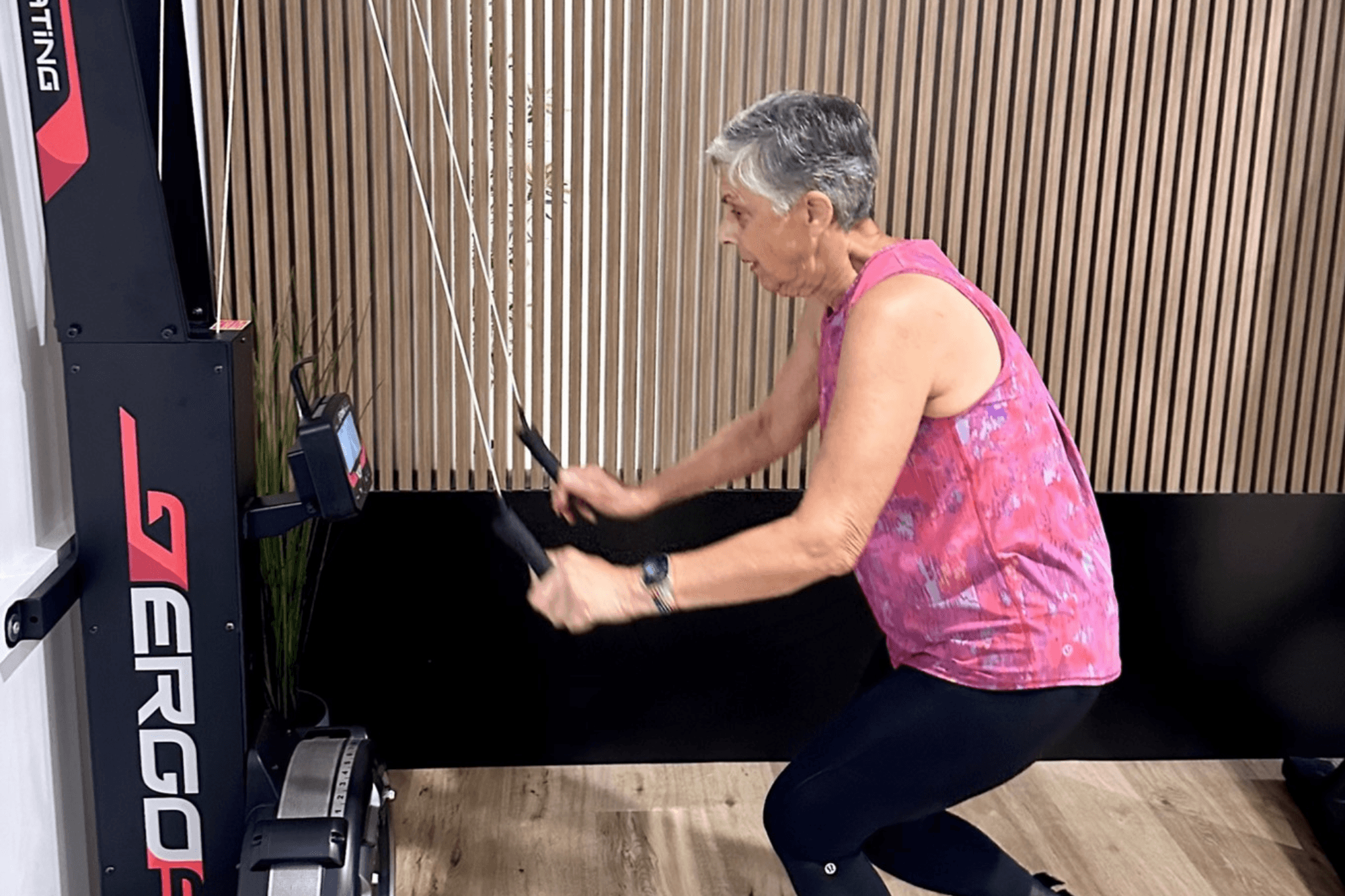

Marianne was a registered nurse at Tamworth Hospital from 1973 until 2013, working first in the emergency department and then as a clinical nurse consultant for rural critical care for 25 years. In 2013, she became a Member of the Order of Australia for her ‘significant services to nursing, particularly through providing emergency health services to rural communities’.
'As a consultant, my portfolio was an area roughly the size of Tassie covering around 20 hospitals. My role was to give the nurses the knowledge and skills to provide critical care to patients in areas where often there were no doctors or doctors were not always available.
'I used to work seven days a week, 12 hours a day because I was so passionate about what I was doing and because there is such a disparity between rural and metro health services.'
Unfortunately Marianne needed to ease back from work due to MS symptoms like fatigue.
'There is a lot more awareness of MS now and a far better understanding with HR and employers about how best to support people living with MS but that wasn’t the case when I was still in the workforce,' Marianne says.
'I had my first episode of MS in 1990 but in those days, you had to have two episodes before you were diagnosed. I wasn’t formally diagnosed until 2007. It explained a lot of things that happened at work – the fatigue and I’d had several falls which I just thought was me running around and being busy.'
Exercise has many proven benefits for people living with neurological conditions, including managing spasticity, stiffness, pain and improved mobility, sleep and mental health.
'There’s only 3 out of the 14 of us in my local peer support group who do exercise, lots of people with MS don’t exercise,' Marianne says.
Marianne, who had always been extremely active due to her work as a nurse, hadn’t realised the benefits of exercise for MS until meeting an EP through her peer support group.
'[EP] Talita Welmans did a presentation for one of my Peer Links groups talking about the benefits of exercise physiology. I’d never really had much exposure to EP before that and she mentioned that the benefit of EP is that it’s a holistic approach.'
Her now weekly sessions with a neuro specialist EP have been life-changing for Marianne.
'My EP went through all my history, my test results, I don’t think I’ve ever had such a thorough assessment. They really work on not just your MS but everything that’s going on in your life.'
'I find EP not only focuses on the importance of exercise but also the mental health component to MS, as well as eating well, getting enough exercise and sleep.
'I’ve gone from Pilates for 11 years to a neuro EP who really focuses on my MS specific issues – fatigue, poor balance etc. but coming at it with an understanding of how people with neurological conditions need specific treatment has been incredible.'
'I walk with hiking poles, and when I did May 50K this year I did over 966 km between my exercise bike and walking,' Marianne says.
'Sometimes with symptoms of MS as you get older it’s an interesting question, what is MS and what is just old age? But I know that staying active helps me either way.'
If you would like to chat to an Exercise Physiologist or a member of our Employment Support team phone 1800 042 138 or email connect@msplus.org.au
Related articles
Finding purpose through peer support: Matt's story
After receiving support from MS Plus following his MS diagnosis, Matt now gives back as a volunteer, creating connection and support for other men living with MS.
- 24 October 2026
Support to keep working: Santo’s story
Discover how MS Plus Employment Support Service has helped Santo stay employed for 30 years after his MS diagnosis through personalised workplace support.

- 19 October 2026
Your spring and summer wellbeing guide
Make the most of spring and summer with practical tips for managing heat sensitivity, staying active, conserving energy and supporting your wellbeing while living with MS or another neurological condition.

- 15 October 2026