‘I was linked in with my MS Nurse not long after diagnosis, she outlined all the services that were available to me,’ Sonya says.
‘I would often chat to the nurses to gain a better understanding when I was trying to make decisions around treatments.’
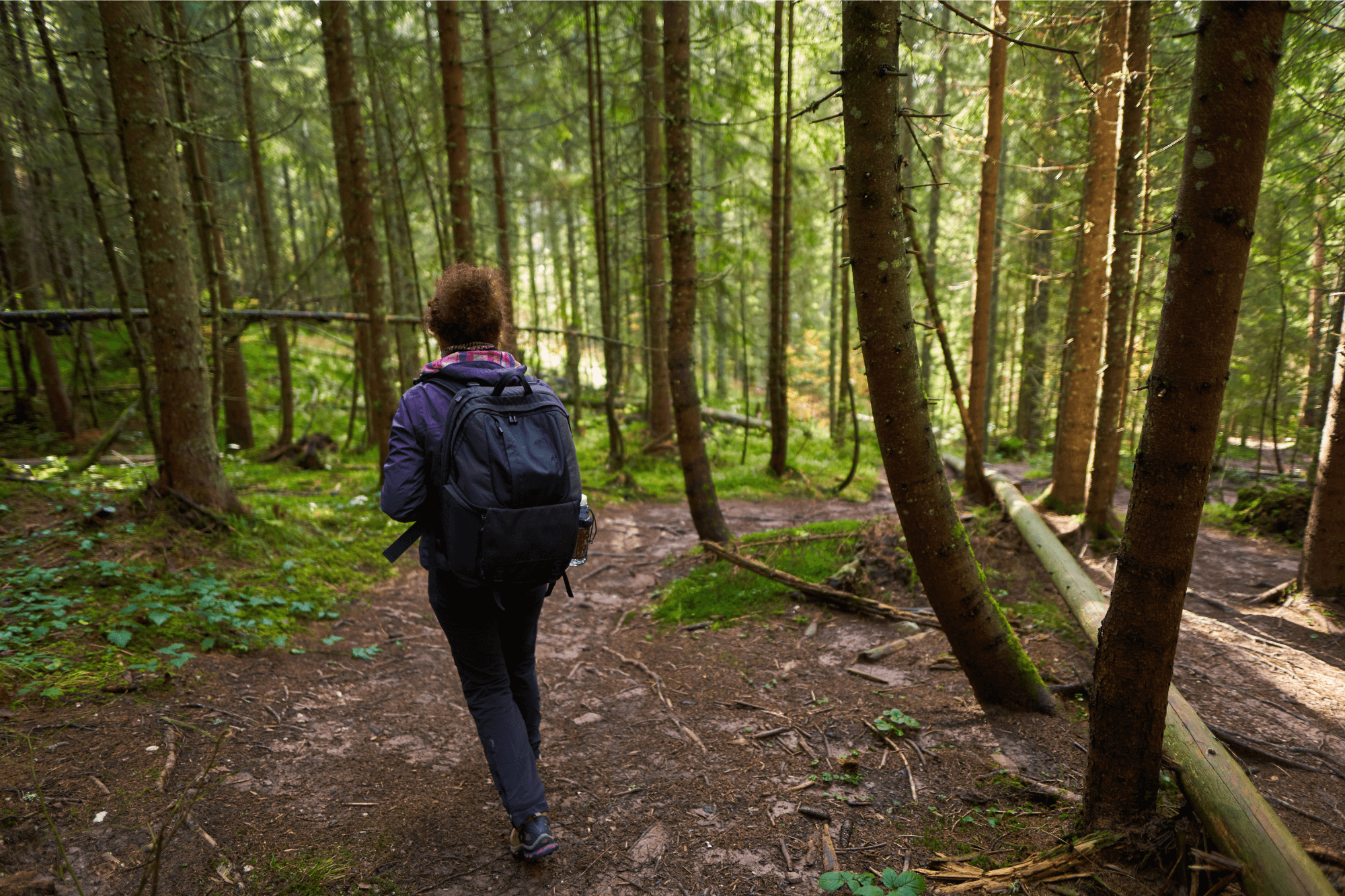
At the end of 2019, Sonya went for a long bushwalk with her family at Valentine’s Peak in Tasmania. It was after that hike that Sonya first began experiencing symptoms of multiple sclerosis (MS).
‘It was this very intense hike and climb. It took us about eight hours and I just didn’t recover after that. The inflammation I had was right through my body. I just thought it was part of getting older and just sort of brushed it off.
‘But after this bushwalk, I ached and hurt and just couldn’t get this inflammation under control. I ended up with pressure in my eye, which I didn’t know at the time was optic neuritis.’
Adjusting to a new way of life was challenging, not just for Sonya but also for some of her loved ones.
‘Even for my mum, I know for her this diagnosis was really hard. It’s just me and mum, so it was difficult for her, but she has been so pleased to see the support network that MS Plus provides.
‘I might be nearly 50, but I’m still her daughter and it makes her more comfortable to know that I have good care and support.’
After her diagnosis, Sonya began accessing therapeutic support to continue to live well.
‘One of the best pieces of advice I got from an MS Nurse was when I was struggling with selecting the right treatment. The nurse said to me, “you’re about to go into a race and you don’t know what car the other person is driving, so what car do you want to pick?” When I looked at it that way my decision suddenly became a lot easier.
‘You want to try and stay ahead of your MS and that was a great way to explain it to someone. That was early on and stuck with me for so long. MS nurses don’t pass any judgement they just explain your options,’ Sonya says.
‘I had this handful of brochures from my neurologist and that’s when I cried because all the options terrified me. I would never have picked the treatment I did based on the brochures, without the guidance I received from my MS Nurse.’
Sonya continues to manage her symptoms through a combination of supports.
‘I am connected with physiotherapists, who I see regularly. This has really helped me to get my strength back in my right leg to the point where I can lift it right up, which I wasn’t able to. Working with the physio has been life changing.
‘I later realised I also have lymphedema in both legs, so my lymphatic system isn’t working like it should. But because I’ve got that background with MS and working with physios, I’m better able to manage this other condition, understanding how the two conditions interact and can be managed
‘I think I’ve always been resilient, but I didn’t realise how resilient. My approach with MS is, I try to think of it as something I must keep in a box. Sometimes it gets out and it’s okay to have a bad day, but you’ve got to keep resetting and moving forward. I try and visualise it. I might need to adapt but it doesn’t stop me from doing what I want to do.’
Sonya recently purchased an ebike, to help her go on long rides with her son along the coast.
‘It’s like with my bike, I’m going to need an engine to get me up the hill, with gardening I now have raised garden beds. Being more adaptive because of my MS flows through to the work I do as well and all areas of my life.’
Related articles
Celebrating 45 years of the MS Gong Ride
Celebrate 45 years of the MS Gong Ride and its impact on people living with MS. Join riders, volunteers and supporters on 1 November 2026.
- News
- +1
- 21 September 2026
Sparkles on my Brain: Georgina’s story
After being diagnosed with MS, Georgina Haig turned her experience into award-winning artwork. Read the inspiring story behind Sparkles on my Brain.
- News
- 21 September 2026
Making the best of it: Greg’s story
After a delayed MS diagnosis, Greg found strength in family, treatment and peer support. Read his story of resilience, adaptation and connection.
- News
- 7 September 2026