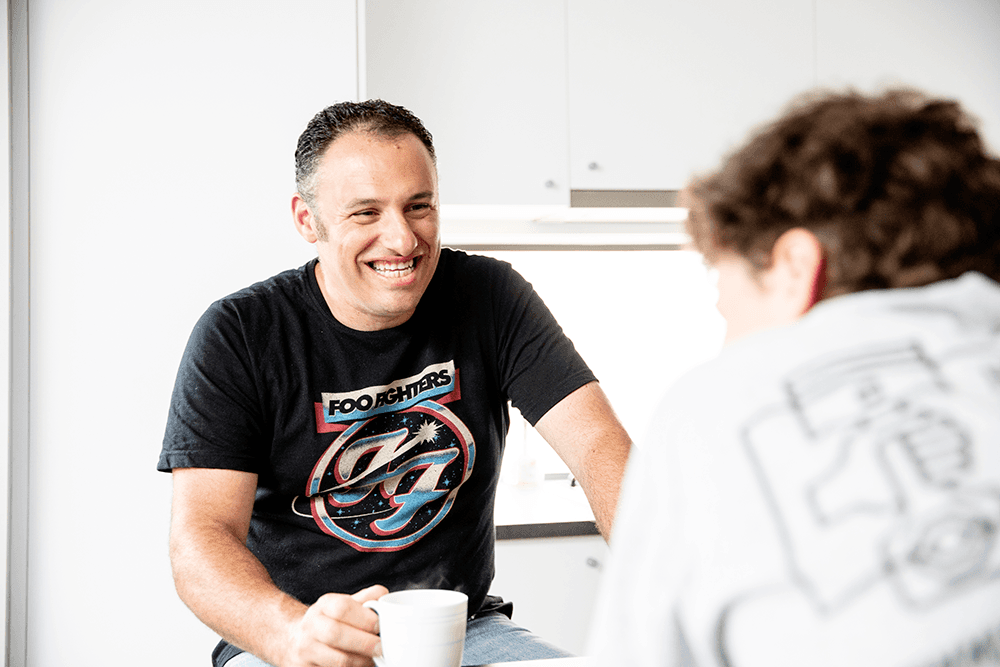
We asked three members of our OT team to share their insights and practical tips.
What does occupational therapy look like in practice?
For Karthik, it’s about helping people work towards the goals that matter most to them.
“At the end of the day, my focus is to maximise independence for my participants,” he says.
That might mean prescribing mobility equipment such as walking frames or wheelchairs to improve community access, or helping someone find easier ways to manage daily activities at home through fatigue management and energy conservation strategies.
Jordan describes it as finding practical solutions that make everyday life easier.
“The right strategy, equipment or environmental change can help a person maintain their independence, feel more confident and continue doing the things that matter to them.”
One example is meal preparation. Jordan works with people to identify barriers and develop strategies such as reorganising the kitchen, using adaptive equipment, preparing meals in stages or planning tasks around periods of higher energy.
For Emily, maintaining social connection and community participation is a key focus.
“Supporting engagement in community activities can be explored with the OT, such as joining a new social club or activity like a pottery class or a coffee catch up club,” she says.
She often supports people with mobility and fatigue challenges by recommending assistive technology and equipment that enables them to continue getting out, connecting with others and doing the activities they enjoy.
Common challenges, practical solutions
Fatigue was a challenge all three therapists highlighted.
Jordan helps people identify which activities use the most energy and develop strategies such as pacing, planning and prioritising tasks.
Emily often works with people to find the right assistive technology, whether that’s a shower chair, cooling attire or adjustable bed, ensuring they have choice and confidence in the solutions they use.
Karthik also recognises the impact neurological conditions can have on family relationships and caregiving responsibilities.
“The family unit is a key component to maintaining physical, emotional and mental health,” he says, highlighting the importance of finding sustainable ways to support both individuals and their carers.
Top tips
Karthik’s tip: Count your spoons
Think of your daily energy as a limited number of “spoons”. Prioritise tasks into must-do, should-do and can-wait categories, and schedule regular breaks throughout the day.
Jordan’s tip: Rest before you’re exhausted
Planned rest breaks are often more effective than pushing through until fatigue takes over. Pacing helps you use your energy more effectively.
Emily’s tip: Rethink what independence means
Asking for help doesn’t mean losing your independence. Delegating some tasks or accessing support can free up energy for the activities that are most meaningful to you.
Find out how occupational therapy can help you
To learn more or book an appointment, visit msplus.org.au/occupational-therapy.
Related articles
Ask Nurse Amy: Staying cool and confident this summer
Learn why heat can worsen MS symptoms and discover practical strategies to stay cool, manage fatigue, stay active and enjoy summer with confidence.
- 14 October 2026
How our services are changing lives: Measuring what matters
Discover how MS Plus services are improving quality of life, independence and wellbeing, with measurable outcomes that show the impact of specialist care.

- 14 October 2026
Finding confidence at work: Jessica’s story
After her MS diagnosis, Jessica faced the challenge of returning to work while managing new symptoms. With support from MS Plus Employment Support Service, she found practical strategies, specialist guidance and the confidence to stay employed.

- 6 October 2026