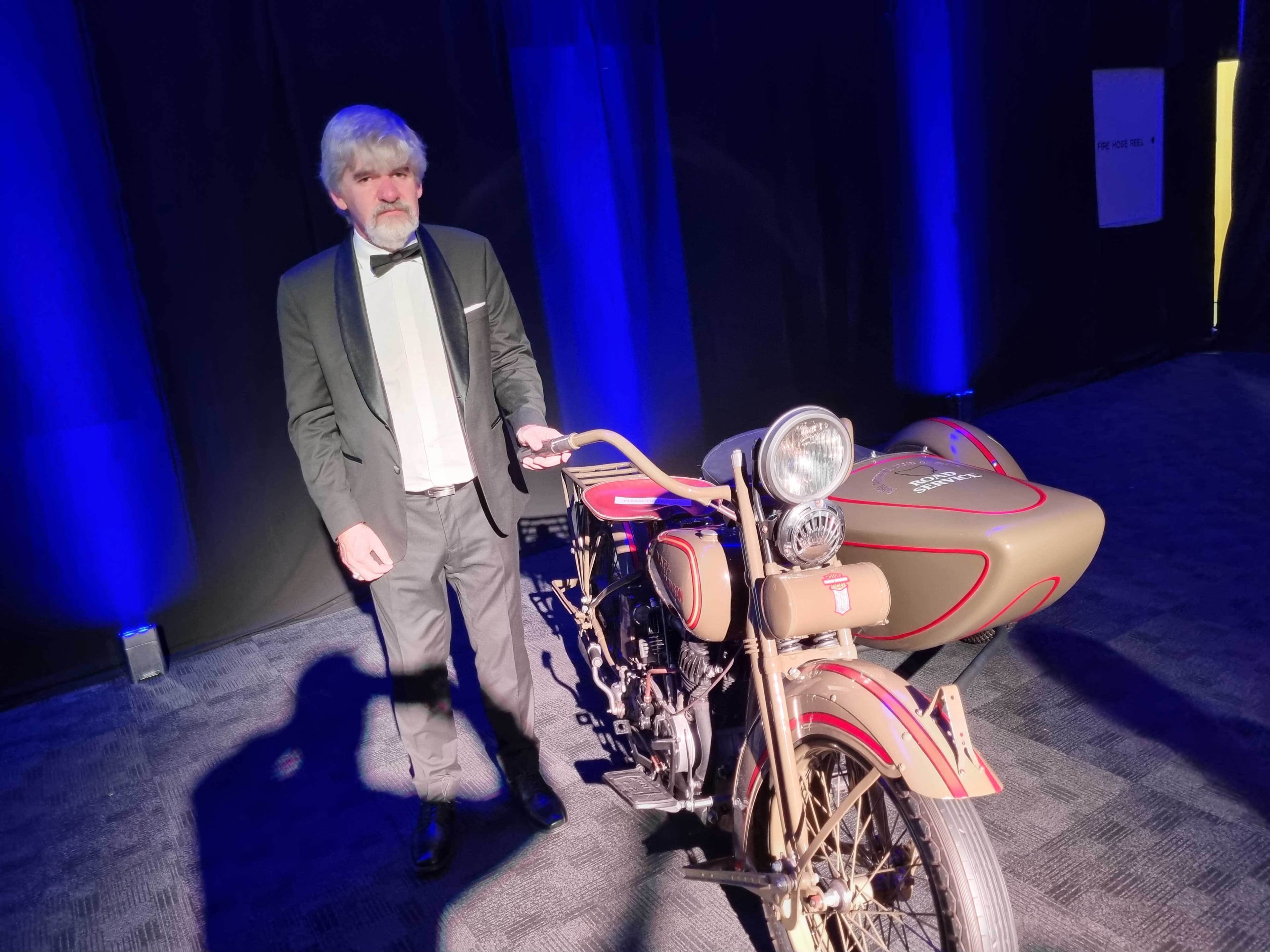
Malcolm McGinn has always believed in the power of helping others, and ensuring people aren’t going through challenges alone.
That is why, after he was diagnosed with Parkinson’s disease six years ago, he quickly turned his attention to volunteering with Parkinson’s Tasmania, a non-profit organisation providing support, education and advocacy for people living with Parkinson’s, their families and carers across the state.
“It’s important to support others in their hour of need. I feel strongly that if you sit on your hands and do nothing, you’re part of the problem. If you get up and push yourself and deal with it, you’re part of the solution,” he says.
“I want to make sure I’m trying to do every little bit I can to help and support people, the way some very good people have supported me over the years.
“The organisation is really passionate about supporting the carers of people with Parkinson’s, and having my wife look after me, I know firsthand just how much effort and load is shared by a carer to look after people with Parkinson’s.”
Malcolm’s passion for helping and educating others has been evident for many years. More than a decade ago, he was diagnosed with prostate cancer. Alongside his friend and former Parkinson’s Tasmania chair Mike Whitehouse, Malcolm organised a bike ride from Hobart to Cairns, spanning 4,800km in three weeks.
“Every night we spoke at rotary clubs, lions clubs or men’s sheds, to get the message out there that it’s ok for guys to talk about men’s health. Just two weeks ago, I had a phone call from a chap who’s just been diagnosed with prostate cancer and is now comfortable to know what to do and how to go about living with it.”
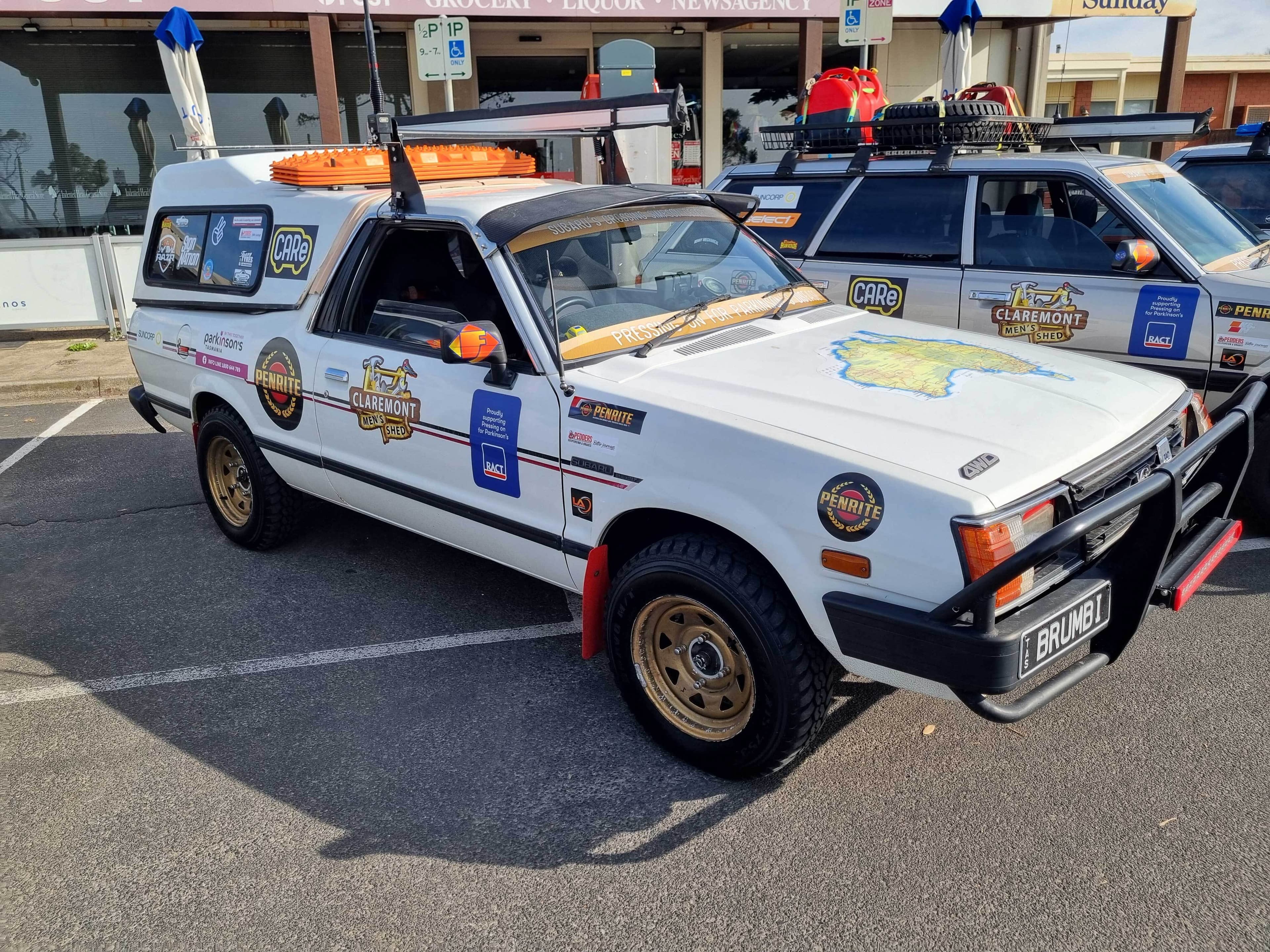
Just last year, he and friends from Parkinson’s Tasmania restored four 1980s Subaru L Series wagons and a Brumby ute and drove more 8,000 kilometres from Tasmania to the Simpson desert, raising funds, holding dozens of community conversations and advocating for government funding for the organisation.
Living with Parkinson’s, Malcolm has also received support from MS Plus, which helps people with other neurological conditions beyond MS as well as their carers and families.
“It was recommended to me that MS Plus could assist me in staying employed a bit longer. I was a bit surprised because I didn’t have MS, but I went in about four and a half years ago, and I was introduced to a program to keep people employed which was nothing short of fantastic,” he says.
“Their support probably kept me at work for an extra two years because I had access to special ergonomic keyboards for computer work and a more comfortable chair that supported my posture better. I can’t speak highly enough of it.”
Next week, Malcolm will speak at the Integrated Care in Focus dinner in Hobartopens in new tab. This MS Plus event, delivered in conjunction with Coloplastopens in new tab and Parkinson’s Tasmaniaopens in new tab, will bring together Tasmanian health professionals to discuss practical approaches to delivering more coordinated, person-centred care. It’s a topic close to Malcolm’s heart.
“I’ve gone through the health system twice – once for prostate cancer and once for Parkinson’s – and I found the process quite dysfunctional. I’ve struggled to navigate my way around it, and I want to do anything and everything I can to lessen that confusion and ambiguity for people.
“My main message for people in health care is to remember that we are all individuals, and people with a story, so it’s important to listen and take note to support people the best you can.”
Related articles
Celebrating 45 years of the MS Gong Ride
Celebrate 45 years of the MS Gong Ride and its impact on people living with MS. Join riders, volunteers and supporters on 1 November 2026.
- News
- +1
- 21 September 2026
Sparkles on my Brain: Georgina’s story
After being diagnosed with MS, Georgina Haig turned her experience into award-winning artwork. Read the inspiring story behind Sparkles on my Brain.
- News
- 21 September 2026
Making the best of it: Greg’s story
After a delayed MS diagnosis, Greg found strength in family, treatment and peer support. Read his story of resilience, adaptation and connection.
- News
- 7 September 2026