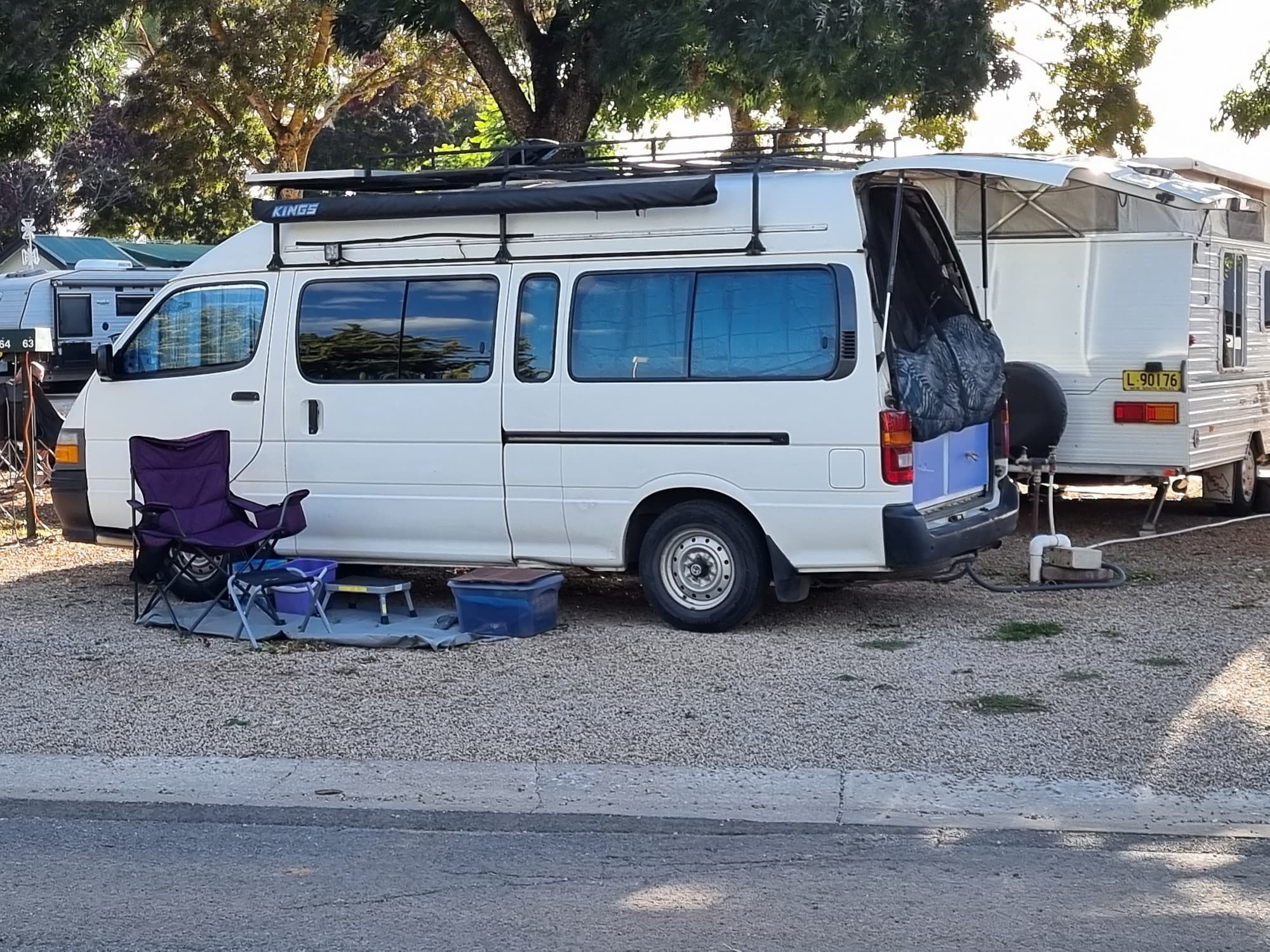
Roslyn has been living her dream these past few months, travelling across the country in an old Toyota HiAce camper. First diagnosed with multiple sclerosis (MS) about 10 years ago, when she was in her early 40s, Ros initially put her dream on hold, until pushing through her fear in February 2023 to hit the road alone.
‘I always had a dream to travel Australia. When I was diagnosed, I thought that dream was gone. But I did two years of research on types of vans and other people’s experiences travelling. Then my youngest finished year 12, and I realised the time was right,’ Ros says.
Ros left her home in Shepparton, Victoria, heading to Geelong then down to Warrnambool, before travelling along the South Australian coast all way to Norseman, WA and on to Kalgoorlie then Perth. Ros is now in Albany, WA and about to head to Esperance, WA to cross the Nullarbor Plain in South Australia for a second time.
‘Like most people with MS, my symptoms weren’t obvious or clear cut in the beginning, and it took me a while to get that diagnosis. I was originally diagnosed with relapsing-remitting MS (RRMS), which in 2020 became Secondary Progressive MS (SPMS). At that point, driving a camper along across the country really began to seem impossible.'
Rising to the challenge
‘My biggest symptom is fatigue. I also experience cognitive issues, really everything just slows down. Numbness issues in my leg come and go and I experience pain daily.’
However, Ros became determined to follow through with her plan, purchasing the Toyota, which she named Hilda, and starting to map out her trip while her daughter was still in school.
‘The way I have succeeded is my frame of mind. Whenever I thought about how far I had to go and felt overwhelmed, I would just break it down in to “where do I need to go today?”.
‘The way we get taught to live with MS, taking things day by day, adapting how you live, I took those resources on the road with me. Sometimes the nights were difficult. It could be bloody hard, but it was so important for me to achieve.’
A few bumps in the road
There have been some difficult times.
Preparing financially for the trip was tough, as Ros had recently stopped working due to her MS. During a test drive in the camper to Geelong last November, Ros fell and broke her ankle, requiring surgery and forcing her off her feet for a few weeks. Later, while in Merredin, WA, Hilda suddenly stopped working and Ros drove a very cautious three hours to Perth, all the while hoping the battery would hold out. At the same time she began experiencing some MS symptoms, including severe nerve pain in her eyes and numbness in her leg.
‘A key moment for me was during therapy for my ankle in Geelong, my physio reassured and encouraged me not to cancel my trip. He had a really positive mindset, and his attitude was really a turning point for me.
‘I’ve learned to embrace and do what I can. Setting myself little challenges and still achieving my dream by adapting a lot. I took what I had originally wanted to do, and how I thought my trip would be, and simply adapted it to account for my MS.
‘Whether this was stopping more frequently or scheduling some downtime to account for the fatigue, after a busy day. If you need to spend the whole rest of the day in bed after doing something, then so be it,’ Ros says.
Finding the right support
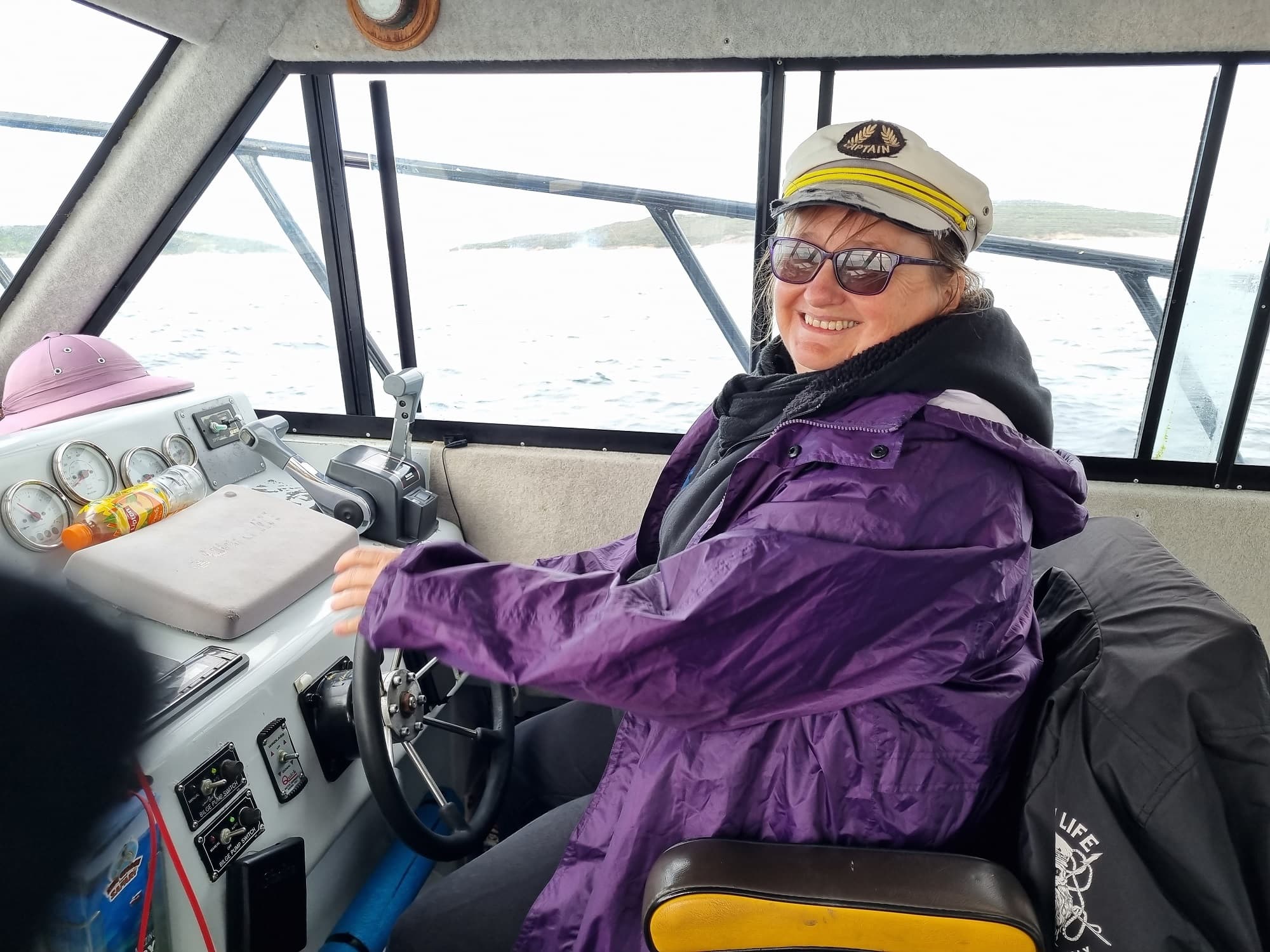
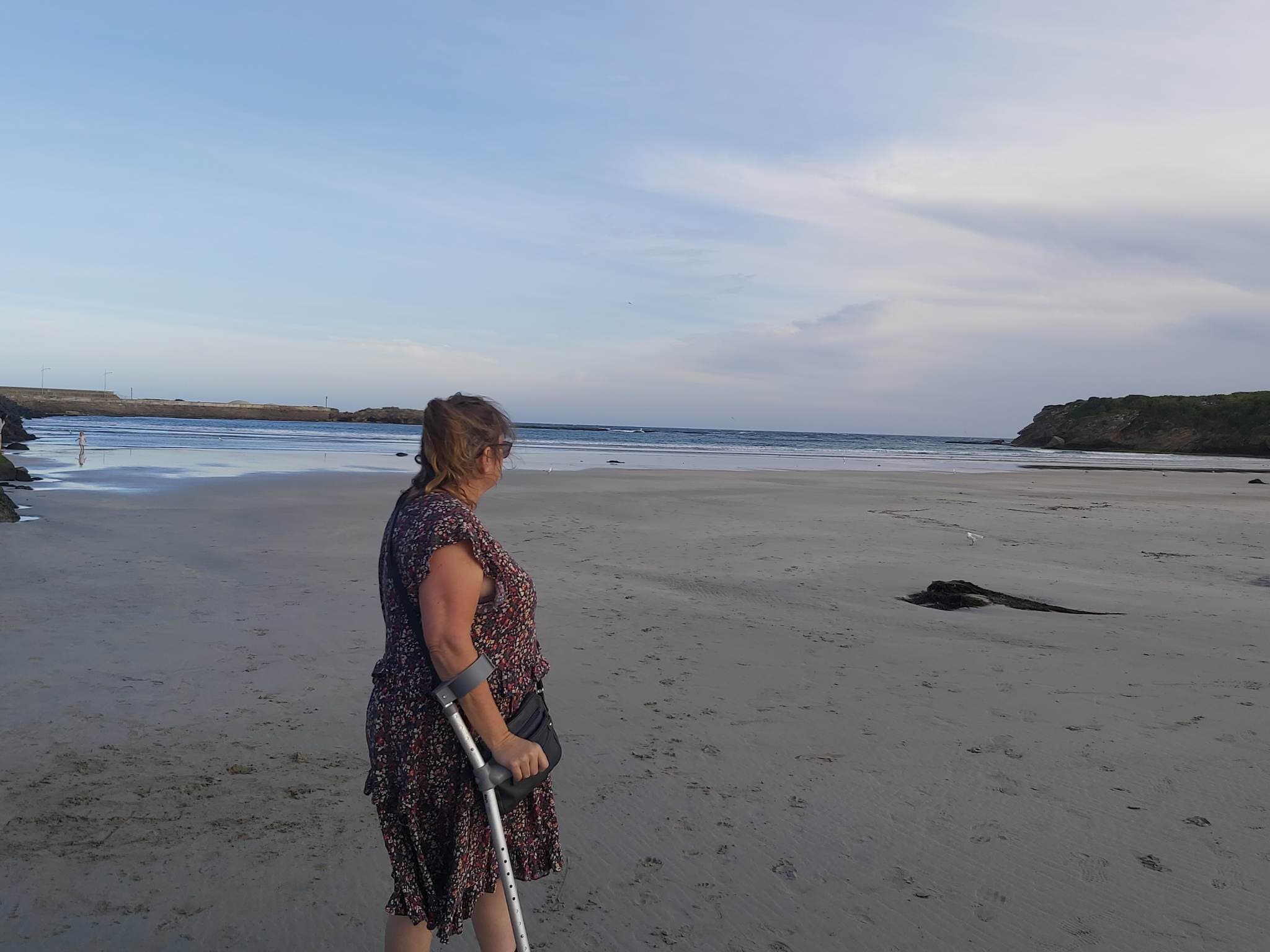
While the trip has been challenging in many ways, the highlights are many. Boating tours, train trips and camel rides. Being able to live right on the ocean and enjoy walks along the beach, which Ros says was great therapy for her ankle, and a spot of whale watching in Albany, all made Ros appreciate her achievements.
‘Watching the whales in Albany, I just stood there and cried, thinking, “this was my dream and I’ve achieved it".
‘When I hit Norseman, I cried also. The terrain there wasn’t as hard as the winding beach roads and the fact that I’d made it that far, which is the gateway to the Nullarbor, made me feel again like I’d really achieved something. Once you’re in the Nullarbor, there’s no one around, which can be a bit scary, but I didn’t let those fears impact me.
‘The best advice I can give is to know your own body and your own mind and what you are capable of,’ Ros says.
‘My faith in God helped me and I also had a wonderful health care team who convinced me I could absolutely do this trip and supported me to make it happen.
‘I was a mess when I was diagnosed and thought my life as I knew it was over, but your MS doesn’t have to define your life.’
In addition to helping her to realise her dream trip, Ros says finding the right support system after diagnosis was critical. Ros currently accesses support from a social worker through the Plus Advisor service and says the MS Plus webinars, including online Pilates, helped to get her through COVID lockdowns. Connecting with others with MS, through her local Plus Peer Support group has also been a critical component of her MS journey.
‘If you prepare yourself, have the supports, research, get people on your side who encourage you, you can really achieve something. In many ways your achievements will be even better than you imagined them to be because you’ve had to work a lot harder to get what you want.’
To find the right supports for you, contact Plus Connect 1800 042 138 or email connect@msplus.org.au
Related articles
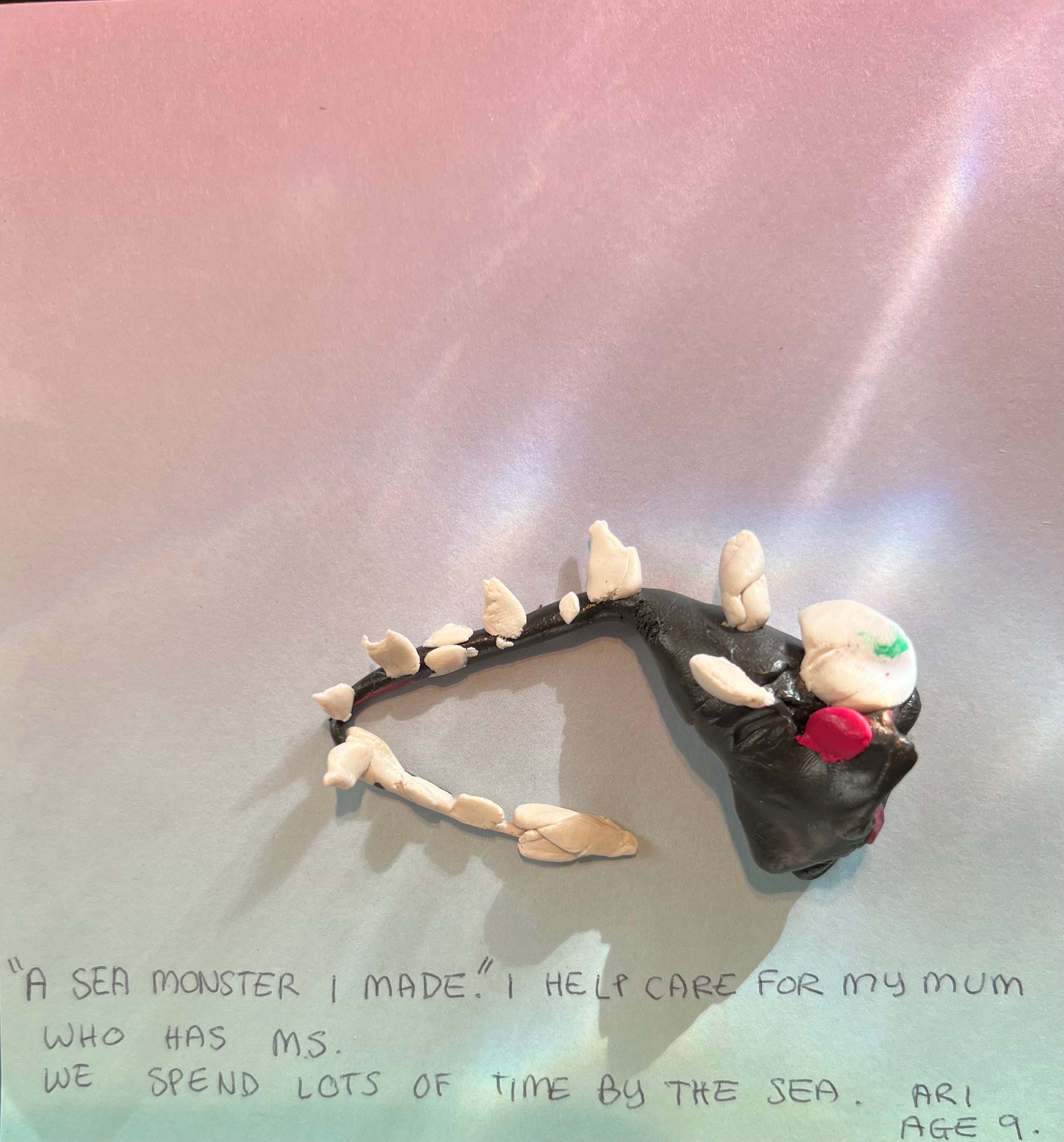
Art as connection: How Ari and Jade share creativity and care
For as long as nine-year-old Ari can remember, art has been an important part of his life. So last year, Ari’s mum Jade encouraged him to enter MS Plus’ Virtual Art Show, which celebrates a range of visual art, including paintings, illustrations, sculptures, craft, digital artwork and photography.
- News
- 25 July 2026
From hospital to home: Christine’s story
When Christine moved into MS Plus’ supported accommodation at Lidcombe Home after an extended hospital stay late last year, it had a profound impact on her health and wellbeing.
- News
- 13 July 2026
You’re not alone: How Mark found his way back from the edge
Mark was at his lowest ebb more than a decade ago. Struggling with a recent MS diagnosis and caring for his mother, who had cancer, Mark says everything was getting too much until three simple words changed everything.
- News
- 29 June 2026