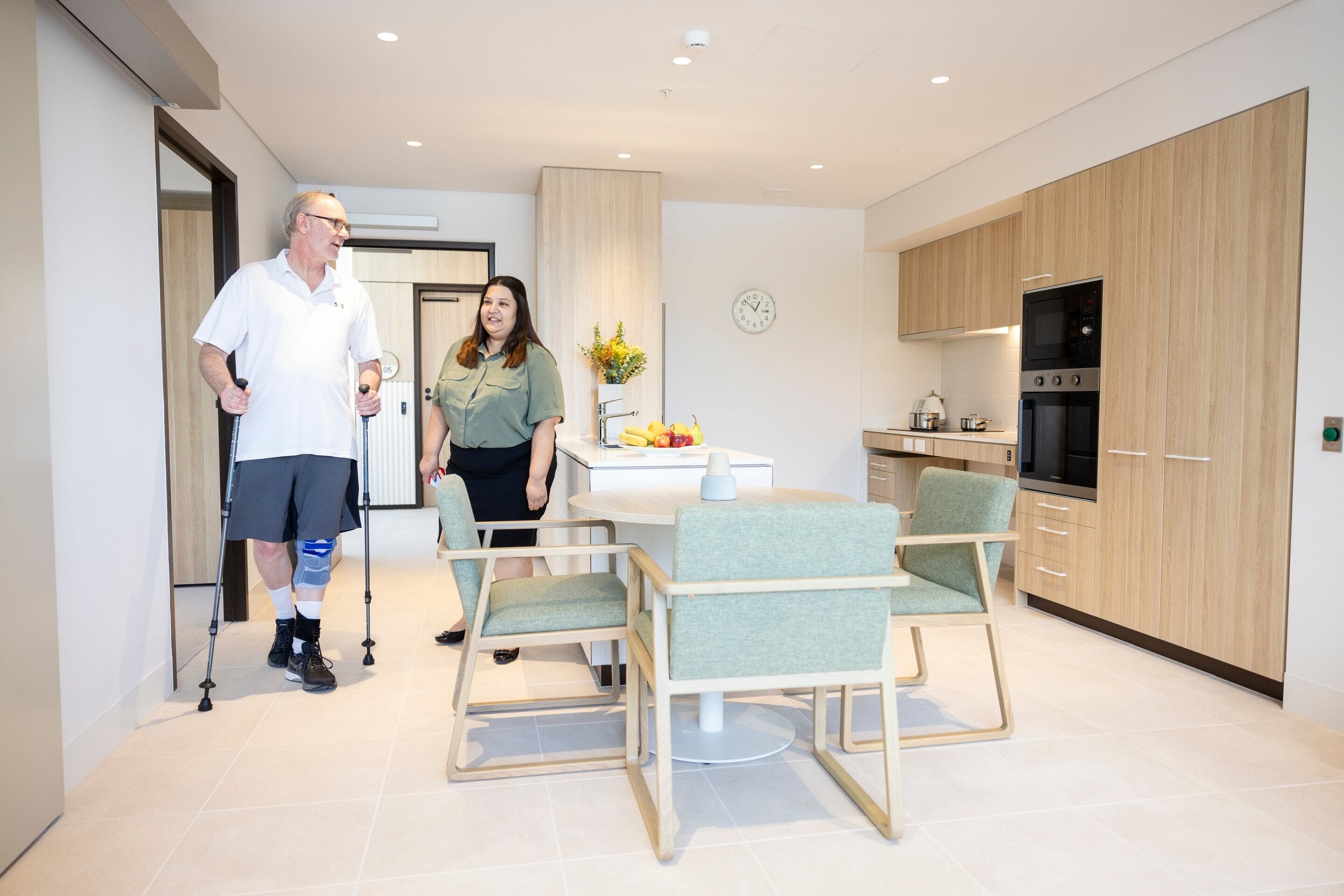
Living with a chronic neurological condition can make everyday activities, like moving safely around your home, managing personal care, or responding to medical needs, much harder over time. If your housing no longer meets your needs, Specialist Disability Accommodation (SDA) may be an essential part of living safely and independently.
SDA funding is available through the National Disability Insurance Scheme, but it is one of the most complex supports to access. Understanding the process and preparing strong evidence can significantly improve your chances of approval.
What is Specialist Disability Accommodation (SDA)?
Specialist Disability Accommodation refers to housing that is specially designed or modified for people with significant functional impairment or high support needs. SDA funding contributes to the cost of the physical home – not daily care or support workers.
SDA homes may include:
- Step-free access and wide doorways
- Assistive technology such as automatic doors and adjustable benchtops
- Emergency power and call systems
- Design features that reduce fatigue and injury
Who is eligible for SDA?
To be considered for SDA, you must show that your neurological condition causes significant and ongoing functional impairment that cannot be reasonably met through standard housing.
Common qualifying conditions may include:
- Multiple sclerosis
- Parkinson’s disease
- Acquired brain injury
- Motor neurone disease
Eligibility depends less on diagnosis and more on how your condition affects your daily functioning, now and into the future.
How SDA fits the NDIS ‘reasonable and necessary’ criteria
The NDIS will only fund supports that are considered reasonable and necessary. For SDA, this means clearly demonstrating that:
- Your current housing puts your safety or health at risk
- Modifications alone are insufficient or impractical
- SDA would reduce long-term support costs
- SDA supports your independence and wellbeing
Your application must show that SDA is not a preference, but a necessity.
Gathering the right evidence (this is critical)
Strong evidence is the single most important factor in SDA approval. The NDIS relies heavily on professional reports, not personal statements alone.
You should include:
- Occupational Therapist (OT) functional assessment from an OT experienced in SDA applications. MS Plus can assist you finding an expert OT if needed.
- Neurologist or specialist reports confirming progression and prognosis.
- Housing assessment outlining why your current home is unsuitable, usually provided by your OT.
- Support coordinator or allied health letters linking housing needs to functional limitations
Reports should explicitly state why SDA is required, not just recommended.
Draft questions for your Occupational Therapist (OT)
These questions help ensure your OT report clearly supports SDA eligibility.
- Can you describe how my neurological condition affects my functional capacity across mobility, self-care, and daily living?
- Can you explain why my current housing environment is unsafe or unsuitable, even with supports?
- Are home modifications alone insufficient or impractical, and why?
- How does my condition impact my ability to safely complete transfers, showering, toileting, or moving around the home?
- Can you link my housing needs to risk reduction, including falls, injury, and fatigue management?
- Based on progression, how are my housing needs likely to increase over time?
- Can you clearly state whether Specialist Disability Accommodation is required, not just beneficial?
- Can your report explicitly address how SDA meets the NDIS “reasonable and necessary” criteria?
Draft questions for your neurologist or specialist
These questions help establish medical necessity and long-term need.
- Can you confirm my diagnosis and whether it is chronic, permanent, or progressive?
- How does my condition affect my physical and/or cognitive functioning on a daily basis?
- Is my condition expected to improve, stabilise, or decline over time?
- Are my symptoms likely to increase my risk of injury or medical complications in an unsuitable home environment?
- Can you comment on how fatigue, weakness, coordination issues, or cognitive changes affect my safety at home?
- Would specialised housing reduce health risks or prevent deterioration?
- Can you include a statement supporting the medical necessity of specialised housing, where appropriate?
Requesting SDA in your planning meeting
Whether you’re attending a plan review or submitting a change of circumstances, be clear and specific.
Helpful tips:
- Use real examples of daily challenges (falls, fatigue, care risks)
- Focus on safety, sustainability, and future needs
- Ask that SDA be formally assessed, even if approval is not immediate
- Inform them of the property type you are seeking (if known) to ensure the right level of funding is approved.
If SDA is not included, request written reasons – this is important if you need to appeal.
Talking points for your NDIS planning meeting
You don’t need to use all of these – pick the points that best reflect your lived experience. Speak calmly and factually, focusing on impact, safety, and sustainability.
1. Explain how your condition affects daily functioning
- My neurological condition causes ongoing and significant difficulties with mobility, fatigue, coordination, and/or cognition.
- These impacts are permanent or progressive and are not expected to substantially improve.
- My functional capacity fluctuates, which increases risk and unpredictability day to day.
2. Describe why your current housing is unsuitable
- My current home environment increases my risk of falls, injury, or medical incidents.
- Essential areas (bathroom, bedroom, kitchen, entry/exit) are not safely accessible.
- Even with support workers present, the physical environment limits safe care delivery.
- Home modifications alone are not sufficient or are no longer effective given disease progression.
- Restricts my ability to maintain or increase my independence.
3. Link housing directly to health and safety risks
- I experience increased fatigue, pain, or symptom flare-ups due to navigating my home.
- There are risks related to emergency response, transfers, or night-time safety.
- My housing contributes to avoidable hospital admissions or crisis situations.
4. Explain why SDA is necessary (not a preference)
- Specialist Disability Accommodation would directly reduce risks to my health and safety.
- SDA would enable safer support delivery and greater independence.
- SDA is a long-term, sustainable solution aligned with my functional needs.
- Without SDA, I am likely to require higher levels of ongoing support or institutional care.
5. Address the ‘reasonable and necessary’ criteria
- SDA supports my independence and wellbeing.
- SDA is cost-effective compared to crisis care, repeated modifications, or hospitalisation.
- SDA aligns with professional recommendations from my allied health team.
6. Make a clear request
- I am requesting that SDA be formally assessed and considered for inclusion in my plan.
- If SDA is not approved at this stage, I request written reasons and guidance on further evidence required.
What to do if your SDA request is denied
An initial rejection does not mean the end of the process. Many SDA approvals occur after further review.
Your options include:
- Requesting an internal review
- Providing additional or clearer evidence
- Seeking advocacy support
- Applying to the Administrative Appeals Tribunal (AAT) if necessary
- Companies like SDA servicesopens in new tab provide support to people who have struggled to access SDA in their plan. MS Plus can help connect you to this service if you wish to explore this option further.
Persistence, clarity, and well-documented evidence often lead to better outcomes.
Remember, accessing supported disability accommodation with a chronic neurological condition can feel overwhelming—but it is possible. The key is showing how your condition affects your ability to live safely and independently, now and in the future. With the right evidence, professional support, and a clear understanding of the NDIS criteria, SDA can become a vital foundation for long-term quality of life and stability.
To find out more reach out today, phone 1800 042 138 or email connect@msplus.org.au
Related resources
Supports for carers of patients with neurological conditions
Carers and informal supports are often an integral part of the care network for people living with neurological conditions. They often take on complex and sustained responsibilities, balancing multiple roles, and many with limited formal support. Health professionals are well positioned to identify early signs of strain, promote preventive strategies, and facilitate access to appropriate services.
- Resources for health professionals
- +1
- 25 May 2026

Dispelling the myth of the ‘MS diet’ with MS Plus Dietitian Julie Orr
Managing diet in the context of MS can feel like navigating a maze of conflicting information. Our Dietitian Julie Orr sheds light on the correlation between diet and MS and provides clear, actionable advice for those living with this condition.
- Diet and nutrition
- 11 May 2026

Managing bladder and bowel changes in MS
Many people living with MS experience changes in bladder or bowel function at some stage. These symptoms may feel difficult to discuss, but they are more common than you might think, affecting approximately one in four Australians. Bladder or bowel changes can be short term, ongoing, mild, or more complex, but seeking support early can help you stay healthy, confident, and in control.
- Relapse and symptoms
- +2
- 30 April 2026